Typical tasks
- Grading — Shaping and levelling ground prior to planting or turfing.
- Trenching — Irrigation lines, drainage runs and cable routes.
- Mulch and soil handling — Moving and spreading bulk materials efficiently.
- Tree and shrub planting — Auger attachment for fast, correctly sized planting holes.
- Turf protection — Tracked models work on finished turf with minimal surface damage.
- Site restoration — Clearing and rehabilitating land after construction work.
Why landscaping contractors choose skid steers
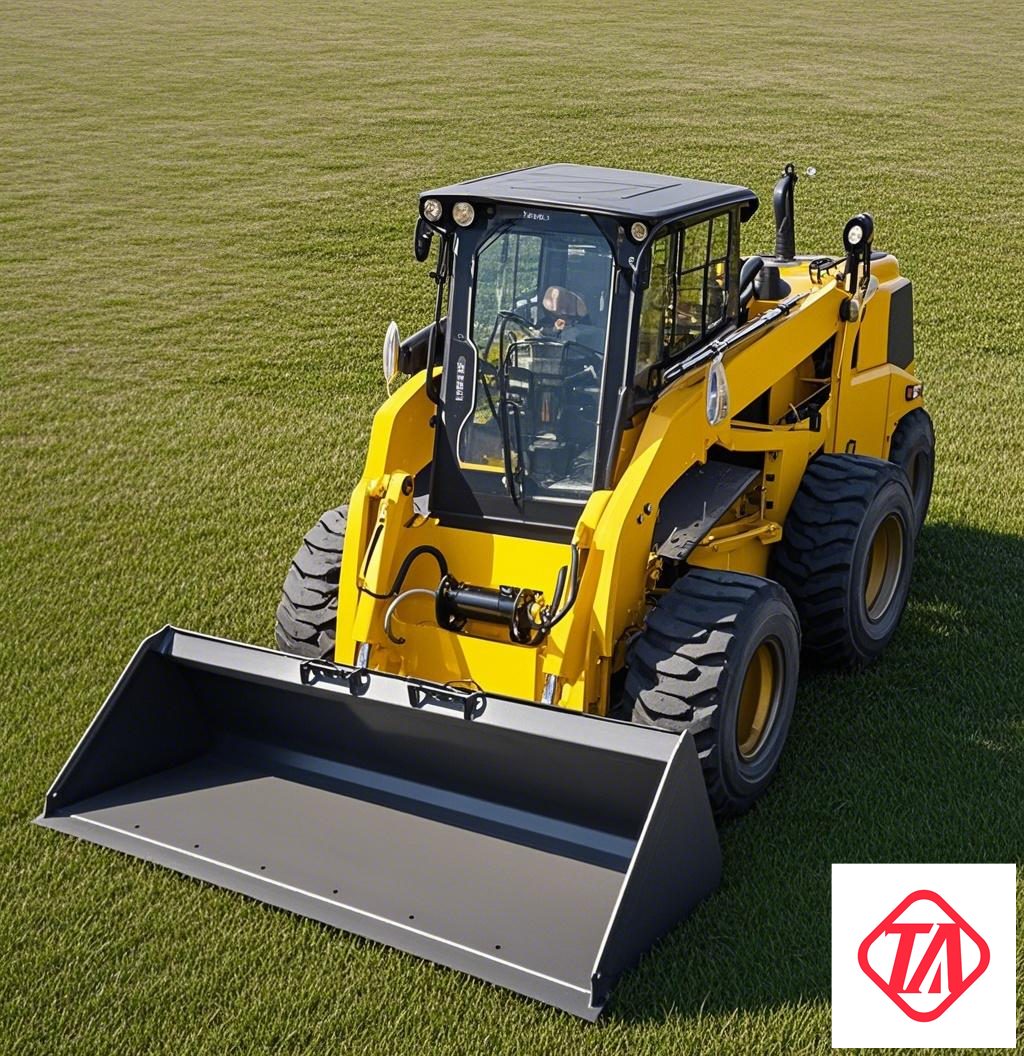
Landscaping work combines tight access, varied surfaces, and constant attachment changes. A skid steer handles all three: it turns in its own length, works on both turf and rough ground, and swaps between bucket, forks, auger, and trencher in minutes without a second machine.
- Residential access: narrow machines pass through standard gates that no other loader can reach.
- Turf protection: tracked loaders spread weight over a larger area, minimising rutting on finished lawns.
- Attachment leverage: one carrier covers grading, planting, augering, trenching, and material handling.
- Productivity: an auger on a skid steer drills fence and tree holes at a fraction of the cost of a dedicated drilling rig.
Which machine to choose
Mini and compact tracked models are the standard choice here. Tracks matter specifically because they spread weight — the difference between a tidily crossed lawn and a set of permanent ruts.
Attachments for this application
See our attachment range for the full list, or tell us your specific tasks and we will recommend a matched package.
Not sure which model fits?
Tell us your working conditions, payload requirements and destination port. Our export team will recommend the right configuration and send a full quotation within 24 hours.
Request a Quote →